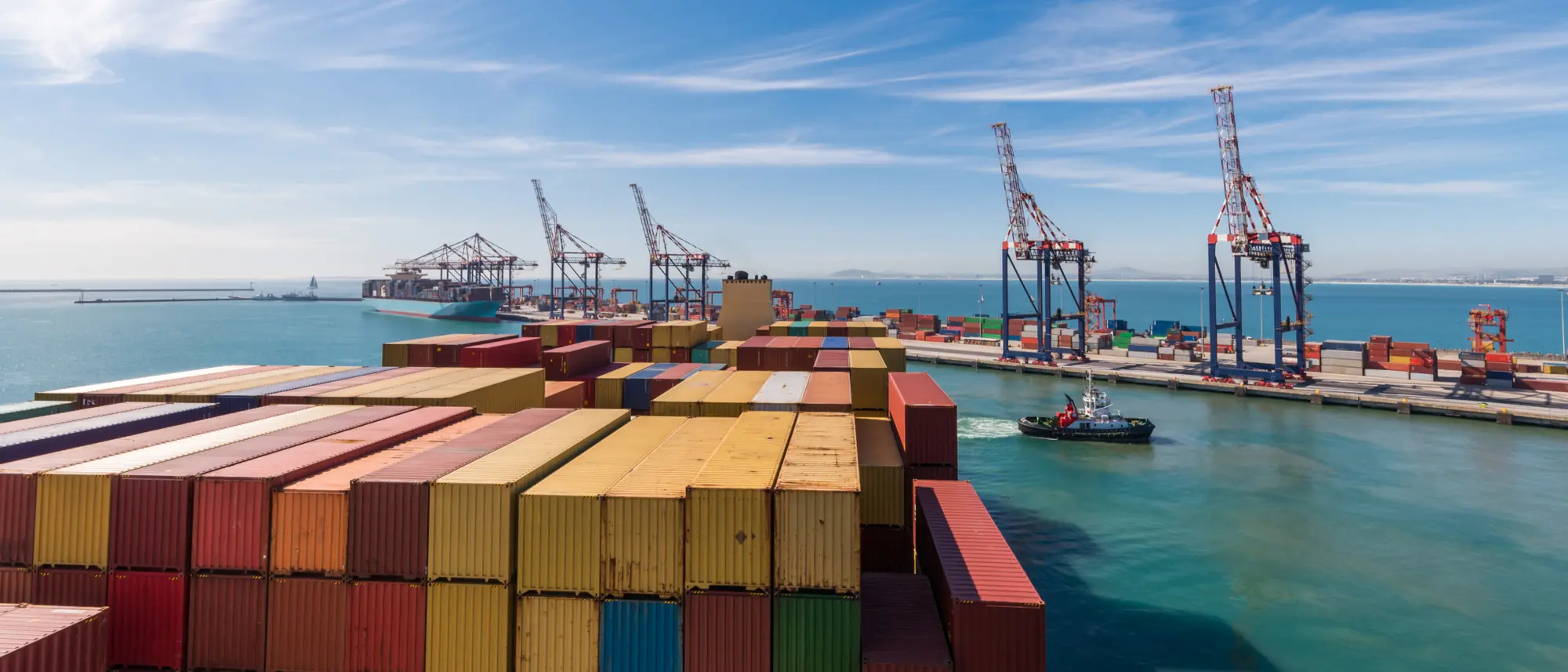
The Western Cape is globally connected, with a modern logistics infrastructure primed for growth. Anchored by the Port of Cape Town and a growing air cargo and road freight network, it serves as a strategic hub for Southern Africa’s logistics and distribution.
As global supply chains shift and Africa expands regional trade under the African Continental Free Trade Agreement (AfCFTA), the Western Cape offers commercially viable investment opportunities. These include port infrastructure, cold chain facilities, last-mile distribution, and intermodal freight systems.
Cape Town’s seaport, airport, and road corridors handle high volumes of agricultural exports, manufactured goods, and e-commerce shipments. Supported by Special Economic Zones (SEZs), a stable policy environment, and strong public-private collaboration, the region is a scalable investment destination.
Key segments include:

Port and Rail Investment
Private sector involvement opens opportunities for global port, rail, and logistics operators.

Warehousing & Storage
E-commerce growth fuels demand for strategically located warehouses to enable faster delivery.
Cold Chain Logistics
The Western Cape drives half of South Africa’s agricultural exports, boosting the need for temperature-controlled logistics.
Why Cape Town & the Western Cape
1. Economic reforms boosting infrastructure investment
Economic reforms by the South African government are unlocking new infrastructure investment, and enhancing logistics efficiency
2. Strategic Location
Direct maritime access to Europe, Asia, and the Americas via the Port of Cape Town, with integrated road and rail links to SACU, SADC, and AfCFTA markets, plus high-frequency logistics supporting agriculture, manufacturing, and the green economy.
3. Export-Driven Economy
A leading exporter of citrus, table grapes, wine, and flowers. Growing demand for cold chain logistics and air freight solutions.
4. Private-Public Collaboration
New private-public collaboration opportunities are emerging for global port, rail and logistics operators, with Requests for Information and Request for Proposals being issued by the South African government and Transnet.
5. Extensive Road & Rail Network
The Western Cape benefits from South Africa’s extensive transport network, which includes over 750,000 km of roads and 30,400 km of rail tracks—the largest in Africa. Direct market access via key road corridors: • N1: Connects to Gauteng. • N2: Links to the Eastern Cape and Durban.
6. Growing E-Commerce & Retail Demand
Expanding e-commerce drives demand for warehousing, last-mile delivery, and advanced logistics.
7. Private Sector Momentum
SEZs, industrial parks, and agri-processing zones require integrated logistics. Major logistics firms, including Maersk, DHL, and DP World, are expanding in the region.
8. Strategic Access to African Markets via AfCFTA
The Western Cape, a key logistics hub for cross-border movement, warehousing, and value-added services, is set to benefit from the AfCFTA, which will open access to a US$ 3.4 trillion market.
9. Stable & Business-Friendly Government
A fiscally responsible provincial government with a track record of clean audits ensures stability and confidence for investors, while supporting public-private collaboration.
10. Incentives
For additional information, click here.


